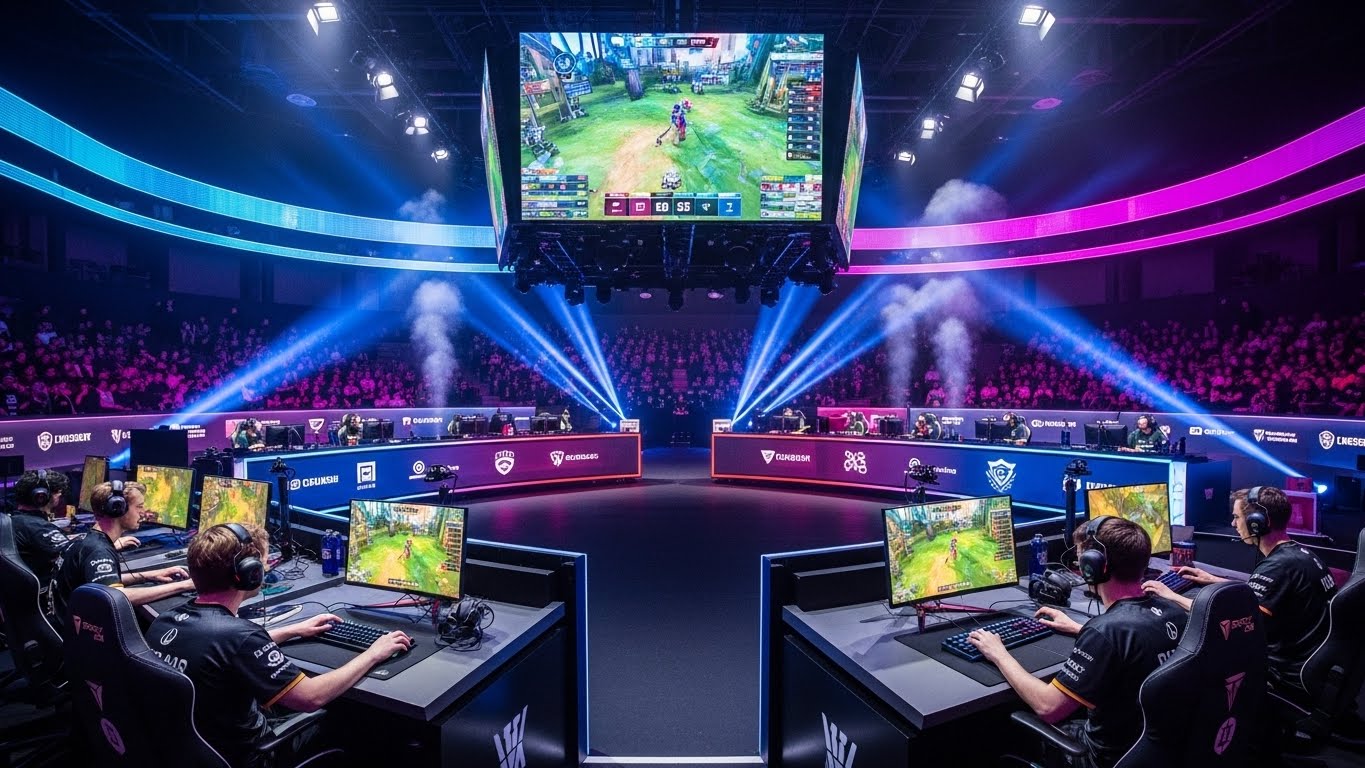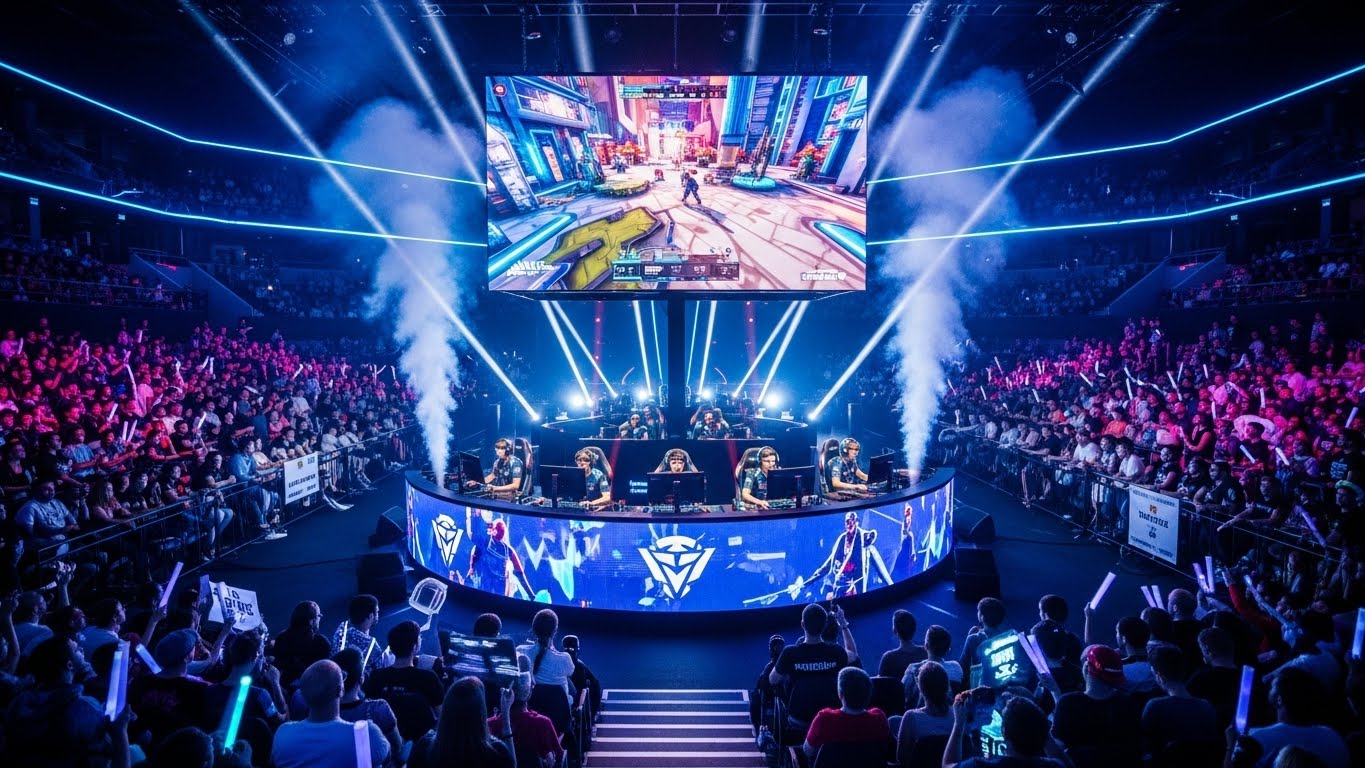
Over the last two decades, esports has undergone a remarkable transformation, emerging from the underground world of competitive gaming into a multi-billion-dollar global industry. With an estimated audience of over 500 million people worldwide, esports has become an integral part of modern entertainment, appealing to players, fans, sponsors, and even investors. What was once a niche community of gamers is now a mainstream powerhouse, attracting massive tournaments, high-profile sponsorships, and media attention.
This blog post will explore how esports has evolved, what factors have contributed to its rapid rise, the various challenges the industry faces, and what the future may hold for this exciting and dynamic sector.
What is Esports?
At its most basic level, esports is the competitive side of video gaming. It involves organized multiplayer video game competitions, often between professional players, teams, or clubs. Esports can be played in a wide variety of genres, including first-person shooters, real-time strategy games, battle arenas, and sports simulation games. Titles such as League of Legends, Dota 2, Fortnite, Counter-Strike: Global Offensive, and Overwatch are some of the most well-known names in the esports ecosystem, each of which has its own competitive leagues and tournaments.
While video games themselves have been around for decades, it was the emergence of online multiplayer games, combined with the rise of dedicated gaming communities, that provided the foundation for the growth of esports as we know it today.
The Origins of Esports: From Arcades to Online Tournaments
The roots of esports can be traced back to the 1970s and 1980s when competitive gaming first started to emerge in arcade settings. Early examples include Space Invaders tournaments and other high-score challenges, where players competed to get the best results. However, it wasn’t until the 1990s that esports started to take on its modern form.
The launch of Doom in 1993 is often cited as one of the first games to establish the concept of online multiplayer gaming. This opened the door to larger-scale competitions and tournaments. During this time, the Cyberathlete Professional League (CPL), founded in 1997, became one of the first major professional esports leagues. Similarly, StarCraft and Warcraft III helped pave the way for the competitive gaming culture that would later spread worldwide.
In South Korea, esports began to gain mainstream popularity with the rise of StarCraft tournaments in the early 2000s. The formation of the Korean e-Sports Association (KeSPA) in 2000, and the establishment of television networks dedicated to esports, such as Ongamenet, played a key role in legitimizing and expanding competitive gaming. South Korea quickly became the global epicenter of esports, with professional players being treated like celebrities, earning large incomes through sponsorships and tournament winnings.
The Explosive Growth of Esports in the 2010s
In the 2010s, esports experienced a massive boom, driven by several key factors. Perhaps the most influential of these was the rise of live streaming platforms, especially Twitch. Launched in 2011, Twitch allowed gamers to stream their gameplay to a global audience, effectively democratizing access to esports content. Viewers could now watch top-tier players live in action, while also interacting with them and other fans via real-time chat. This sense of community, combined with the accessibility of online streaming, helped esports grow exponentially in popularity.
Around the same time, major gaming titles began to embrace esports more fully, with developers building competitive elements directly into their games. League of Legends (LoL), launched by Riot Games in 2009, became one of the most popular competitive games in the world, and its annual League of Legends World Championship began attracting millions of viewers and tens of millions of dollars in prize money.
Dota 2, a game developed by Valve, also helped propel esports into the mainstream, with its annual The International tournament boasting one of the largest prize pools in the history of esports. By 2018, The International’s prize pool exceeded $25 million, a number that rivaled some of the largest traditional sports tournaments in the world.
The Impact of Sponsorships and Investments
As esports grew in prominence, so did the interest from major companies and investors. Brands like Coca-Cola, Intel, Red Bull, and Samsung began sponsoring esports teams, tournaments, and events. This influx of sponsorship dollars helped to fuel the growth of esports leagues, improve tournament production values, and offer substantial financial support for players and organizations.
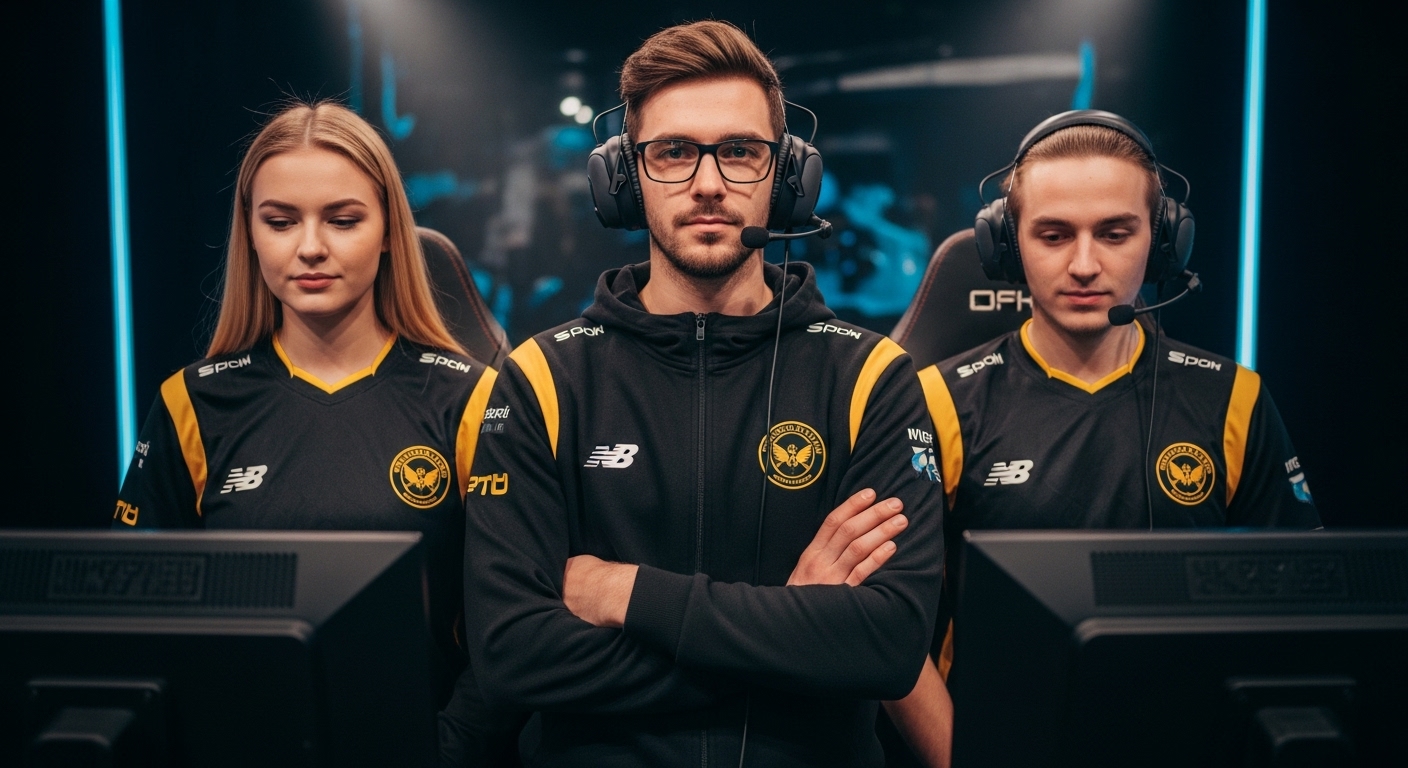
Esports organizations, such as Team Liquid, Cloud9, and FaZe Clan, began to form professional rosters of players and staff, operating like traditional sports teams. As the financial stakes increased, so did the professionalism of the esports industry. High-profile investors, including venture capitalists and even traditional sports owners, began to pour money into esports, seeing it as a highly lucrative and rapidly growing market.
Moreover, as esports grew in stature, it began to attract attention from traditional sports broadcasters. Major networks like ESPN, Fox Sports, and Turner Broadcasting began airing esports competitions, increasing the visibility of the industry and helping bring esports to a broader audience. This expansion into mainstream media signaled that esports had officially entered the cultural zeitgeist.
Esports as a Social and Cultural Movement
One of the most remarkable aspects of esports is its ability to foster a global, interconnected community. Fans from all over the world can come together to celebrate their favorite players and teams, watch live tournaments, and interact with others who share their passion. This sense of community has been a major driving force behind the success of esports, particularly with platforms like Twitch allowing players and fans to engage with one another in real-time.
Beyond the traditional fan experience, esports has also been at the forefront of social and cultural change. It has helped to challenge traditional stereotypes about gaming, showing that competitive gaming is a legitimate sport in its own right. Esports has provided opportunities for women and marginalized groups to participate in competitive gaming at the highest level, with female players increasingly breaking into the pro scene.
Additionally, esports has had a profound impact on education, as many colleges and universities around the world now offer esports scholarships and field varsity teams. Esports has become a pathway to higher education, with schools embracing gaming as a potential career path and recognizing the skill sets required for competitive gaming, such as teamwork, strategy, and critical thinking.
The Challenges of Esports
Despite its rapid growth, esports is not without its challenges. One of the most pressing concerns is player health and wellbeing. Professional players often face intense schedules, practicing for hours on end and traveling frequently for tournaments. This can lead to physical and mental burnout, and some players have been vocal about the toll that professional gaming can take on their health.
To combat this, many esports organizations have begun investing in support systems for their players, including psychologists, nutritionists, and fitness experts. Ensuring that players maintain a healthy work-life balance is crucial for the longevity of both the individuals and the industry.
Another challenge facing esports is the lack of universal regulation. While major tournaments and leagues have established rules and guidelines, there is still no global governing body for esports. This means that issues like cheating, match-fixing, and unfair play can sometimes go unaddressed. As the industry continues to grow, finding a way to establish clear, enforceable regulations will be key to preserving the integrity of competitive gaming.
Finally, there is the question of esports’ sustainability. While the industry has enjoyed explosive growth, there are concerns about whether it can continue to expand at the same rate. The market is becoming increasingly saturated, with new games, leagues, and organizations entering the scene. To maintain growth, esports will need to continue innovating and finding new ways to engage audiences.
The Future of Esports
Looking ahead, the future of esports appears bright. With the continued rise of mobile gaming, new technologies such as virtual reality (VR) and augmented reality (AR) could open up new avenues for competitive gaming. Esports may eventually evolve into fully immersive experiences, where players and fans can interact with the game world in ways previously thought impossible.
The potential inclusion of esports in the Olympic Games is another milestone that could elevate the industry to new heights. Discussions are already underway about whether competitive gaming should be recognized as an Olympic sport, and if it happens, it could provide esports with the kind of mainstream acceptance that could propel it even further into the global consciousness.
Moreover, as the global audience for esports continues to grow, there will likely be increased investment in grassroots organizations and youth esports leagues. This will help cultivate the next generation of esports stars and ensure that the industry remains fresh and exciting for years to come.
Conclusion
Esports has evolved from a subculture of gaming enthusiasts to a global entertainment force. With its combination of intense competition, a passionate fanbase, and huge financial stakes, esports is now one of the most exciting and fast-growing industries in the world. From its roots in small LAN parties to its present status as a multi-billion-dollar enterprise, esports has proven that it has the power to reshape the future of sports and entertainment. While there are challenges ahead, the future of esports is undeniably bright, and its cultural significance will only continue to grow as more people embrace gaming as a legitimate and exciting form of competitive sport.