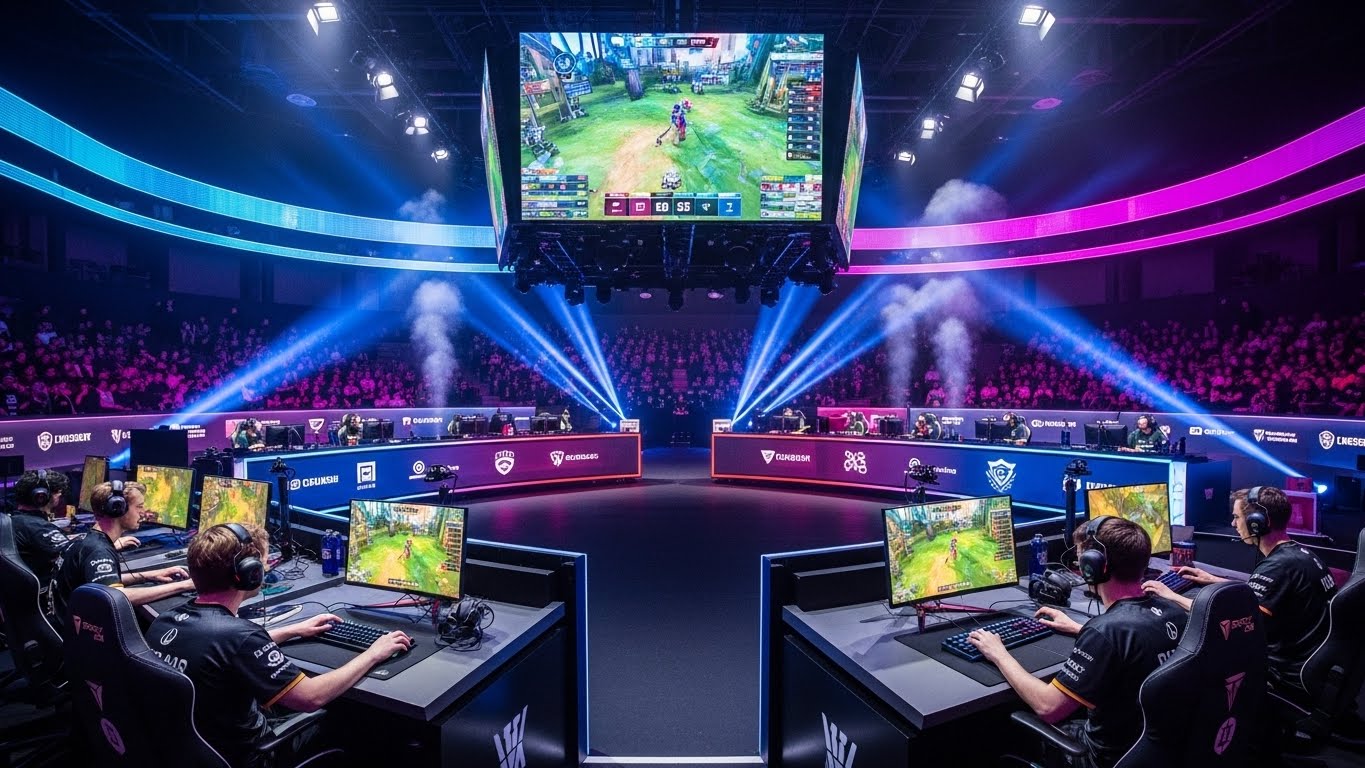
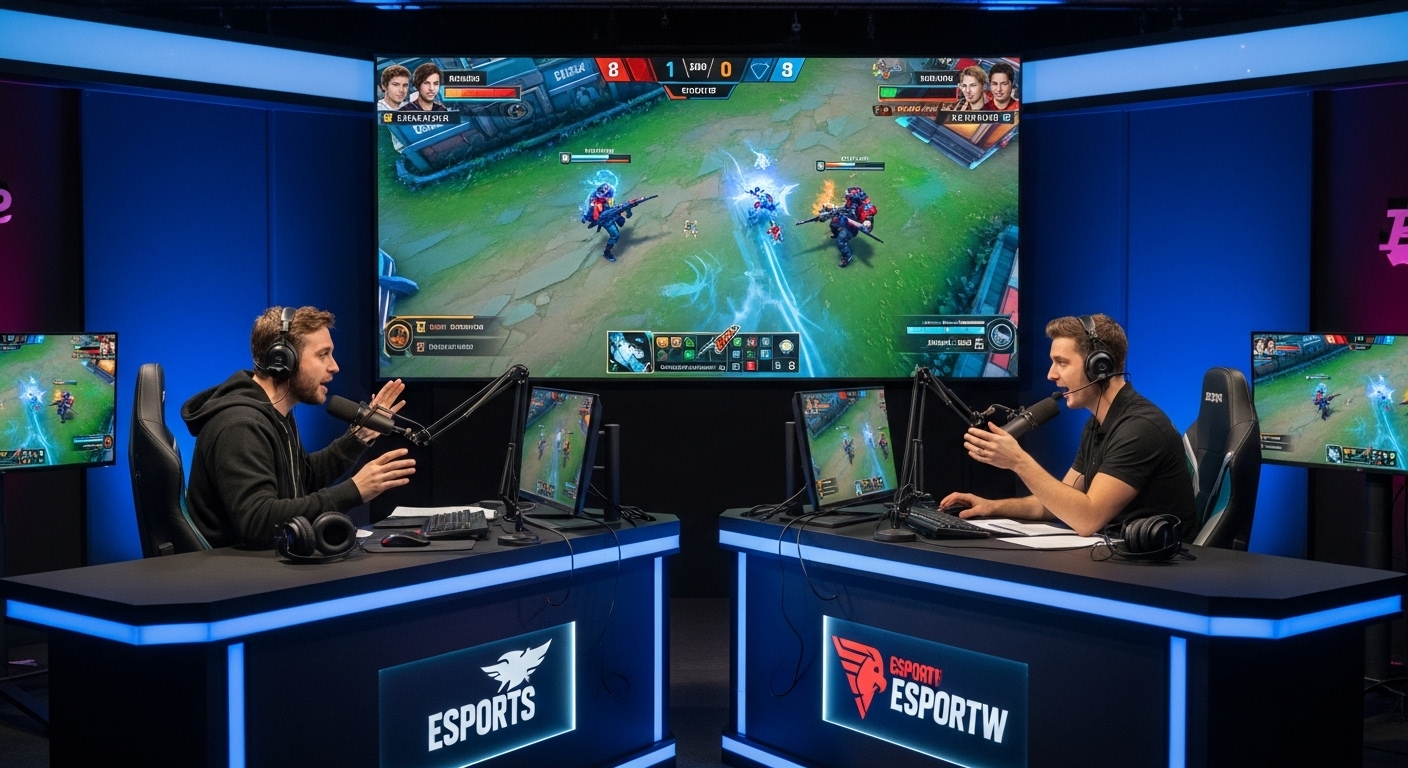
Esports has evolved into one of the fastest-growing entertainment industries in the world. From local tournaments streamed to a few hundred fans to sold-out arenas with millions of online viewers, competitive gaming has transformed into a global spectacle. But at the heart of this experience lies a role often overlooked yet absolutely essential: the caster, also known as the commentator.
Casters are more than just voices narrating a game. They are entertainers, analysts, educators, and cultural ambassadors who connect fans to the competition unfolding before them. Without their storytelling, explanations, and passion, esports broadcasts would lack the energy and accessibility that make them so engaging.
This article explores the role of casters and commentators in esports—how they elevate the viewing experience, their unique skill sets, the challenges they face, and their broader impact on the esports ecosystem.
1. The Origins of Esports Commentary
Before diving into modern-day esports casting, it’s worth understanding how the role emerged.
In the earliest days of competitive gaming, tournaments were small, often hosted at LAN cafés or community centers. Matches were displayed on screens for local audiences, but without structured commentary. Players and fans were left to interpret the action for themselves.
The shift began in the late 1990s and early 2000s with the rise of games like StarCraft: Brood War in South Korea. Networks such as Ongamenet (OGN) broadcasted matches to television audiences, introducing professional commentators to explain the fast-paced strategy. These early casters not only described the gameplay but also gave it drama, transforming a hobby into a spectator sport.
Western esports followed a similar trajectory. Titles like Counter-Strike 1.6, Warcraft III, and Quake developed grassroots commentary scenes where passionate fans picked up microphones and began streaming live commentary online. Many of today’s top casters started as unpaid enthusiasts who loved the games enough to share them with others.
Today, casting has become a profession, with top commentators contracted by tournament organizers, leagues, and streaming platforms. They’ve become celebrities in their own right, often with fanbases rivaling professional players.
2. Types of Casters: Play-by-Play vs. Color
One of the most important dynamics in esports commentary is the division of roles between play-by-play casters and color commentators. This model was borrowed from traditional sports broadcasting but adapted to fit the unique pace and complexity of video games.
Play-by-Play Casters
- Role: Provide fast, energetic narration of the in-game action.
- Strengths: Quick speech, clarity, and the ability to translate chaotic moments into understandable stories.
- Examples: In League of Legends, David “Phreak” Turley; in CS:GO, Anders Blume.
- Purpose: Keep viewers engaged, especially those who may not fully understand the technical aspects of the game.
Color Commentators (Analysts)
- Role: Provide depth, analysis, and strategic insights.
- Strengths: Game knowledge, ability to break down tactics, strong understanding of player psychology.
- Examples: Henry “HenryG” Greer in CS:GO or Jonathan “Reinforce” Larsson in Overwatch.
- Purpose: Help seasoned fans appreciate the subtleties and give casual viewers a way to learn.
Synergy Between the Two
The magic of casting lies in the chemistry between play-by-play and color commentators. A good duo balances hype and expertise, ensuring the broadcast is both thrilling and educational. Some esports also use tri-cast setups (three commentators), especially for games that require a deeper layer of analysis.
3. Storytelling: Turning Matches Into Narratives
One of the caster’s greatest responsibilities is storytelling. Esports matches are not just mechanical exchanges of skill—they are battles with history, rivalries, and human emotion.
Casters weave these elements into narratives, creating arcs that resonate with viewers. Consider:
- A veteran team facing off against rising rookies.
- A player returning from injury or suspension to prove themselves.
- A regional rivalry, such as North America vs. Europe in League of Legends Worlds.
By contextualizing the match, casters give fans a reason to care beyond just the scoreline. They transform individual plays into memorable moments, often crafting lines that fans remember for years.
4. Building Hype and Atmosphere
Casters are also entertainers. Their tone, excitement, and energy set the mood for broadcasts. A well-timed shout or dramatic pause can elevate a clutch play into an unforgettable memory.
Think of iconic lines like:
- “What are you doing, StepBro?!” (a humorous accidental slip that became a meme).
- Or the legendary hype call during Dota 2’s The International 2018: “The throne’s falling! OG are doing it!”
These moments often get replayed, clipped, and shared across social media, expanding the cultural footprint of esports. In many cases, the caster’s voice becomes inseparable from the highlight itself.
5. Educating New Viewers
Esports titles can be incredibly complex, with steep learning curves. Casters bridge this gap by explaining mechanics in accessible ways.
For example:
- In StarCraft II, casters simplify build orders and resource management for casual audiences.
- In League of Legends, they explain why a specific dragon buff or Baron Nashor fight is crucial.
- In Counter-Strike, they highlight why utility (smokes, flashes) sets up tactical plays.
By teaching without overwhelming, casters help onboard new fans and ensure esports remain welcoming to fresh audiences. This educational aspect is vital for long-term growth.
6. Cultural and Linguistic Adaptation
Esports is global, and casting plays a vital role in bridging cultures. Major tournaments are broadcast in multiple languages, with caster teams adapting their style for local audiences.
For example:
- Korean casters are known for their explosive, passionate delivery, reflecting local broadcasting traditions.
- English casters often mix humor with analysis, aiming for balance between hype and explanation.
- Spanish, Portuguese, and Chinese casters often bring regional flair, using expressions and cultural references unique to their audiences.
This localization makes esports accessible worldwide, strengthening its status as a truly international industry.
7. Casters as Personalities and Influencers
Modern casters are not just voices during broadcasts—they are personalities with their own brands. Many stream on Twitch, create YouTube content, or engage with fans on Twitter and TikTok.
This presence expands their influence, allowing them to:
- Build loyal fan communities.
- Share behind-the-scenes insights.
- Contribute to esports discourse.
Some casters, such as Sean “Day[9]” Plott, have transitioned into influential figures beyond casting, shaping esports through education, hosting, and production work.
8. The Challenges of Casting
Despite its glamorous image, casting is not without challenges:
- Travel & Scheduling: Top casters often travel globally, facing burnout from packed tournament calendars.
- Job Security: Casting is freelance-heavy, with contracts varying from event to event.
- Criticism: Casters face intense scrutiny from fans, who critique their bias, accuracy, or style.
- Voice Strain: Maintaining vocal health is a constant concern, especially during long broadcasts.
Balancing professionalism, energy, and personal well-being can be difficult, and many casters speak openly about the mental and physical toll of the job.
9. Comparison with Traditional Sports Commentary
While esports casting borrows from traditional sports, it also differs significantly:
- Faster Pace: Esports often move faster than sports like football or baseball, requiring rapid narration.
- Technical Depth: Games can involve complex mechanics and strategies that need expert explanation.
- Community Culture: Esports audiences expect humor, memes, and internet culture references.
Still, the role of connecting fans to the action is universal. Just as football has iconic voices like John Madden or Martin Tyler, esports has its own legends.
10. The Future of Esports Casting
The future of casting will likely evolve alongside technology and audience expectations. Some trends to watch include:
- AI Integration: AI may assist casters by providing live stats, predictions, or instant replays.
- Interactive Broadcasts: Platforms may allow viewers to choose different caster perspectives or adjust analysis depth.
- Diversity & Inclusion: More women, non-English speakers, and underrepresented groups are entering the casting scene, enriching the industry.
- Cross-Media Stardom: Casters may expand into hosting variety shows, podcasts, or even traditional sports broadcasting.
Ultimately, as esports grows, so too will the prestige and influence of its casters.
11. Case Studies: Legendary Casting Moments
To illustrate the impact of casters, let’s look at a few iconic examples:
- Dota 2 – “The Play” (TI2): TobiWan’s commentary during a legendary Na’Vi vs. IG match immortalized a single fight in esports history.
- CS:GO – “Olofmeister on Fire” (ESL One Cologne 2014): Anders and Semmler’s excitement cemented Olofmeister’s boost as legendary.
- League of Legends – Worlds Finals: Casters like Quickshot, CaptainFlowers, and Phreak have created dozens of iconic calls that shaped how fans remember finals.
These moments highlight how casters don’t just describe games—they define their legacy.
Conclusion
Casters and commentators are the lifeblood of esports broadcasts. They transform complex games into accessible, emotional experiences for millions of fans around the world. Their voices carry the hype of incredible plays, the weight of rivalries, and the joy of shared community moments.
While players are the stars on stage, casters are the storytellers who ensure that every play is remembered and every tournament becomes part of esports history.
As esports continues to grow, so too will the role of casters—evolving from passionate fans with microphones to global ambassadors of competitive gaming. Their importance cannot be overstated: without casters, esports would not be the same spectacle it is today.